
Connect any store with Zapier

Connect any store with Zapier

Easily add ebook sales & watermarking to your store using our Zapier integration. No coding required.

Our Zapier integration lets you connect any store with LemonInk. As long as your store has either its own Zapier integration or can send webhooks, you'll be able to automate ebook sales in no time.

Below you'll find a step-by-step tutorial on how to set up a Zap that'll automatically watermark and deliver ebooks to your customers. The process is pretty straightforward, but if you get stuck, feel free to email us and we'll help you out.

  1. Set up your store in LemonInk

    Before building your Zap, set up your store in LemonInk once.

    1. Go to the Stores section, add a new store and pick the "Custom" integration. Its page shows a store ID and an API key — we generate the key for you automatically, no need to create one by hand.
    2. In Your files, link each ebook product from your shop to the corresponding master file. Use the same product ID that your store sends when it notifies Zapier about new orders.
    3. Only link the products that need to be watermarked — LemonInk automatically skips any line item it doesn't recognise.
    4. Optionally, enable email delivery on the store so LemonInk sends the download link to your customers for you.
  2. Wait for new orders

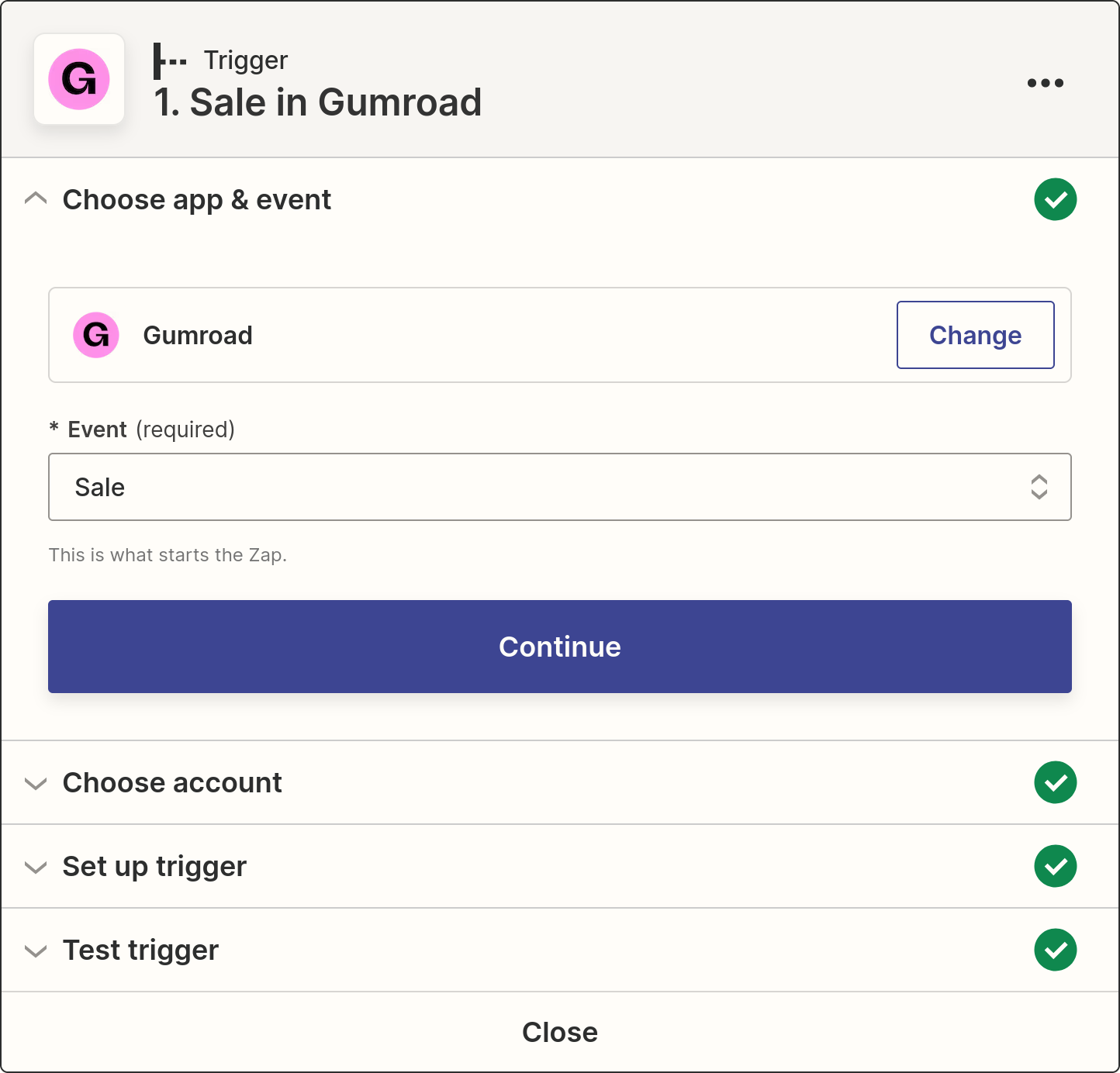
    The first step of your Zap will always be your store: it needs to get notified whenever a new order is placed. First, search for your ecommerce platform in Zapier's trigger database to see if there's an integration provided by your platform. If there is, use it — it'll make things easier.

    If you can't find your platform among existing integrations, look for "Webhooks by Zapier" and set your store to send webhooks to the address provided by Zapier. Let us know if you need help with that.

  3. Create a watermarking order

    Now for the good part: send the whole order to LemonInk and let us figure out the rest.

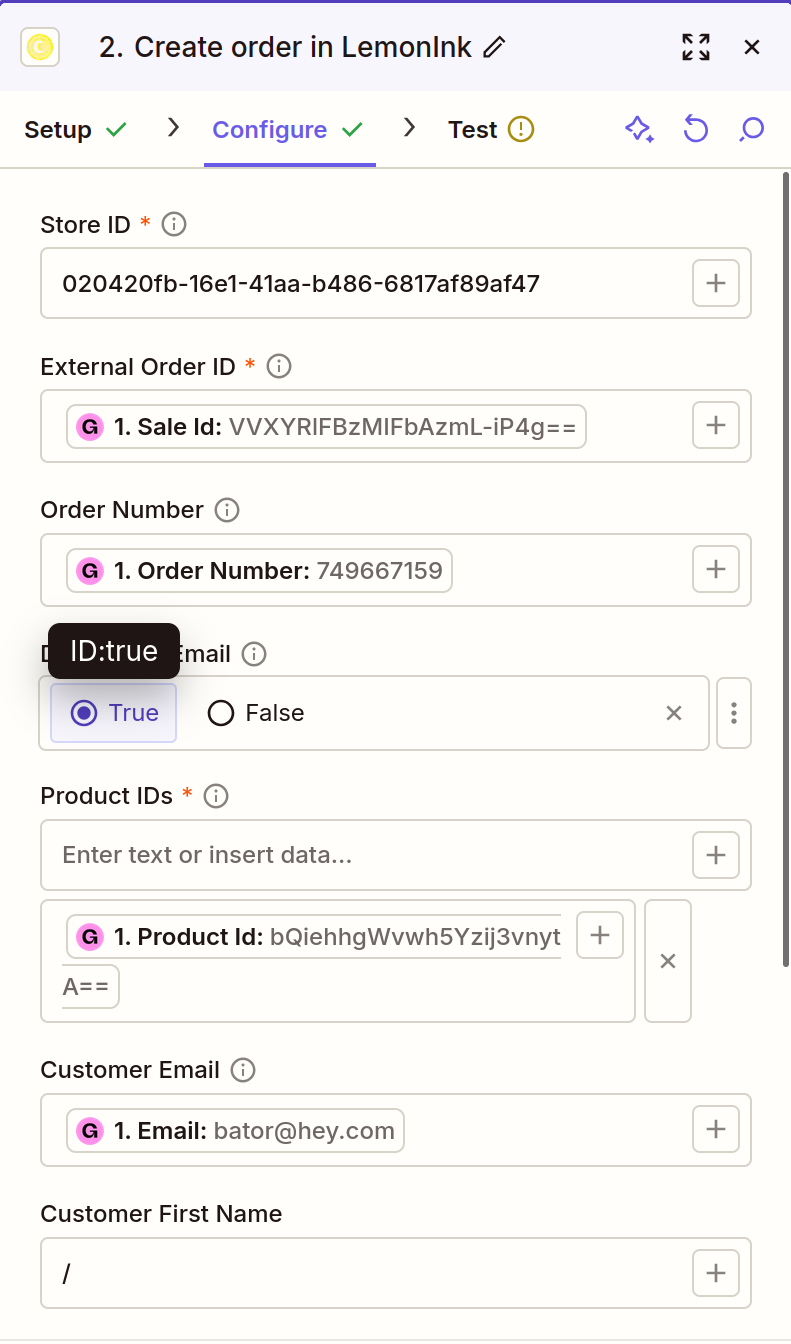
    Add a "LemonInk" action and select the "Create Order" event. When Zapier asks you to connect your LemonInk account, paste the API key from your store's page (step one). Then map the fields from your store notification:

    1. Store ID — the ID you copied from the Stores section.
    2. External ID — the unique order ID from your store. We use it to avoid watermarking the same order twice, so it must be unique.
    3. Order number (optional) — the human-friendly reference shown to your customer.
    4. Customer — the buyer's email and name (or first and last name). Email is required if you want LemonInk to deliver the download link automatically.
    5. Line items — the product IDs from the order. LemonInk matches them against the products you linked in the previous step and watermarks only the ones it recognises.

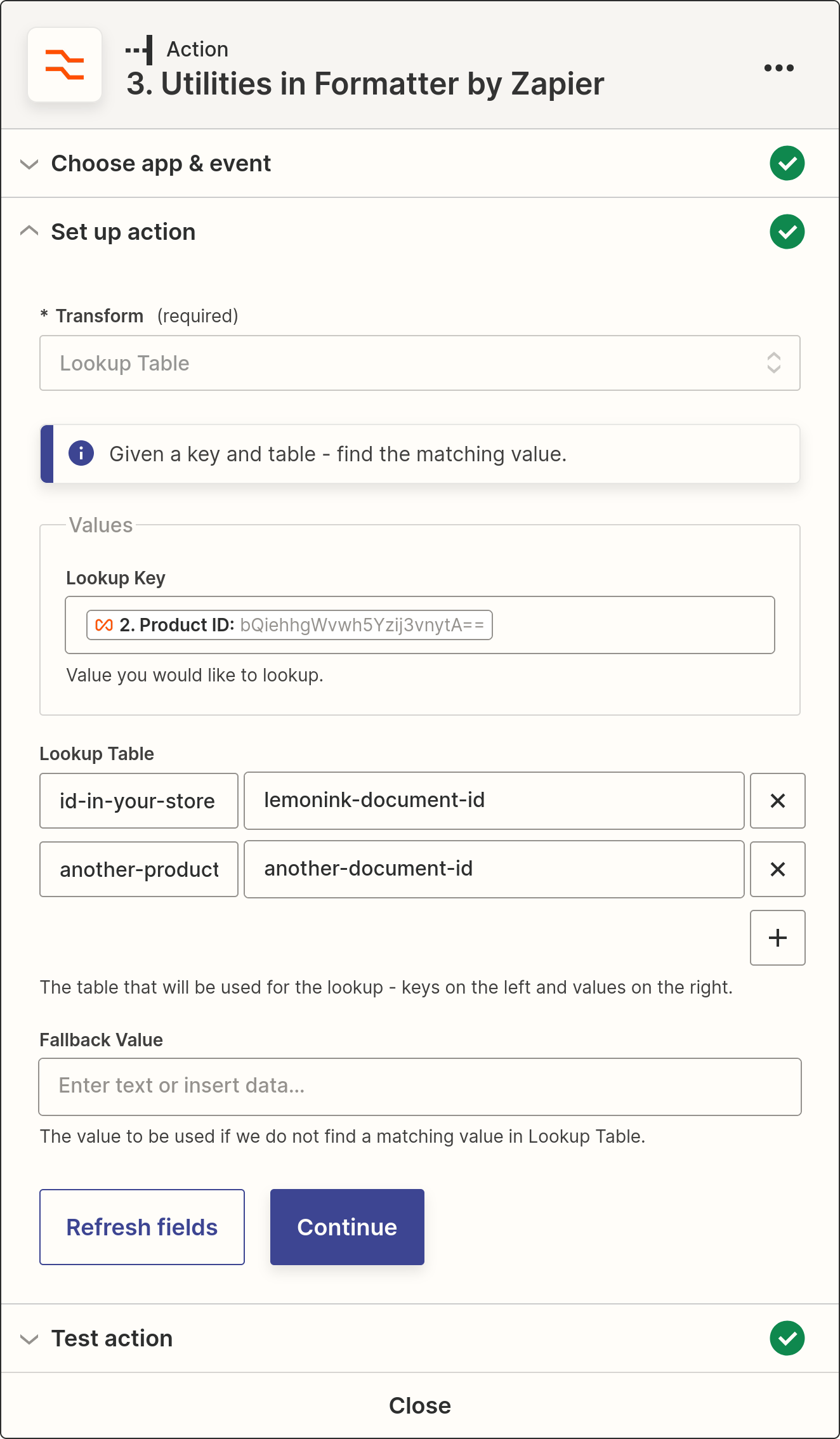
    Because the mapping lives in LemonInk, there's no need to loop over line items, build a lookup table or filter out non-ebook orders in Zapier — just pass the order through.

  4. And deliver

    Finally, your customer needs to receive their watermarked files.

    The easiest option is to let LemonInk handle it: enable email delivery on the store (step one) and we'll email the download link as soon as the order is watermarked. Nothing more to build in Zapier.

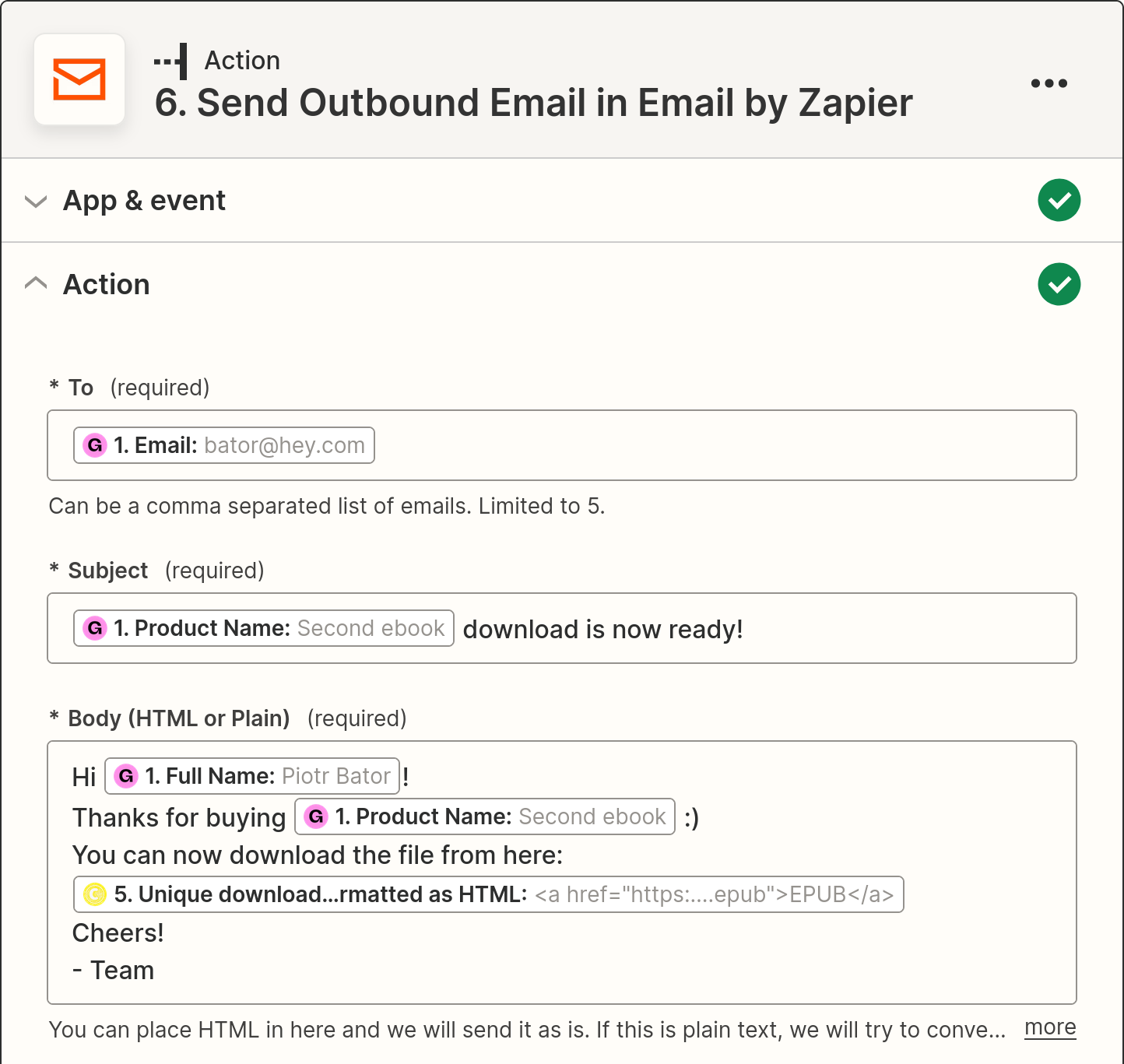
    Prefer to send your own email? The "Create Order" action returns a "Download URL" — drop it into an "Email by Zapier" step, or pass it back to your store to show within the order history.

How does ebook watermarking work?

LemonInk is a cloud service used to secure digital books from piracy. It applies a digital watermark to each purchased ebook making it unique and traceable.

  • After each purchase LemonInk will create watermarked versions of your ebooks and attach them to the user’s order allowing them to easily download their individual copies.
  • Each file is digitally marked both visibly (by adding the purchaser's email address to its content) and invisibly (by embedding a series of obfuscated markers into an ebook's code).
  • This technique discourages users from publishing the files on the internet and allows you to track down those who’ve published them nevertheless.